National Police Appreciation Week is an annual observance dedicated to honoring police officers’ dedication, sacrifice, and commitment to community safety. Recognized in the United States each year in May, the week culminates with Peace Officers Memorial Day on May 15.
In 2026, the focus extends beyond gratitude, to action: promoting mental health resources for officers, strengthening community‑police dialogue, and highlighting modern policing innovations that improve safety and trust.
Why 2026 Matters: Evolving Expectations and Renewed Support
2026 marks a pivotal moment for policing appreciation and reform trends that began earlier in the decade. Public demand for accountability coexists with strong support for officers’ mental health, family well‑being, and community engagement programs. It reflects that balance: honoring service and advocating for meaningful improvements in how policing and communities work together.
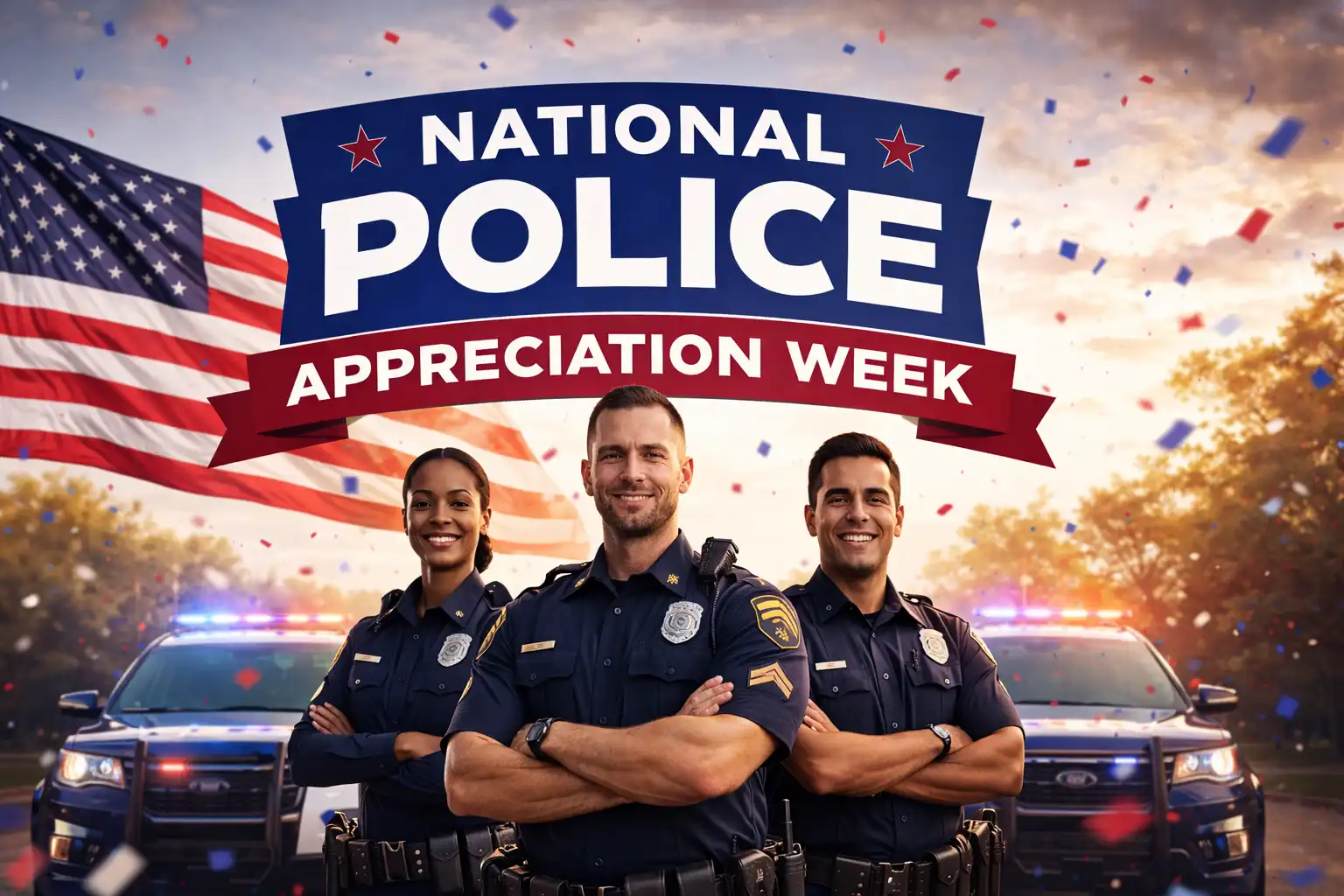
This year’s theme often centers around phrases like “Serve, Protect, Understand” — signaling joint responsibility among officers and civilians to build safer, healthier neighborhoods.
Key Dates for National Police Appreciation Week 2026
Here’s a clear snapshot of important dates related to the 2026 observance:
| Observance | Date (2026) |
|---|---|
| National Police Appreciation Week Begins | Sunday, May 10, 2026 |
| Mid‑Week Recognition & Community Events | May 11–14, 2026 |
| Peace Officers Memorial Day | Friday, May 15, 2026 |
| Week Concludes | Saturday, May 16, 2026 |
Police Appreciation Week always begins the Sunday before Peace Officers Memorial Day, providing a full week to celebrate and reflect.
The History Behind Police Appreciation Week
The origins of Police Appreciation Week trace back to the early 1960s, when the U.S. Congress designated May 15 as Peace Officers Memorial Day. The idea expanded over time into a full week as communities sought dedicated space to honor law enforcement beyond a single day.
In its earliest days, the week focused mainly on recognition events. Over decades, it evolved to include education on public safety, community programs, and support for officer families. In recent years, especially through the 2020s, the observance also became a platform for building positive police‑community relationships, integrating modern expectations with time‑honored respect for service.
Themes and Focus Areas for 2026
Each year, organizations and communities can adopt themes to shape how they observe the week. For 2026, several key focus areas stand out:
1. Officer Wellness and Mental Health Support
Law enforcement professionals face unique stresses — from traumatic incidents to long hours and public scrutiny. In 2026, more police departments and advocacy groups are emphasizing psychological support systems, peer support networks, and resilience training. Community partners are encouraged to support these efforts through awareness campaigns and fundraising.
2. Community‑Police Partnerships
Most communities now recognize that public safety is not the sole responsibility of law enforcement. Workshops, open forums, and joint problem‑solving events bring citizens and officers together to address local issues cooperatively. Whether it’s neighborhood watch programs or youth engagement initiatives, collaboration is key.
3. Honoring Fallen Officers
Peace Officers Memorial Day remains a solemn highlight of the week, honoring those who paid the ultimate price while protecting others. Virtual memorials, reading of names, and flag ceremonies are common ways to remember their legacy.
4. Advancing Policing Innovation
Modern policing increasingly utilizes technology, data analysis, and community feedback to improve outcomes. Police Appreciation Week 2026 often features presentations on new tools and strategies that increase transparency, reduce bias, and enhance officer safety.
National Police Appreciation Week 2026 stands out as a moment for action, understanding, and meaningful engagement. It is not simply about saying “thank you” to law enforcement, it’s about forging deeper partnerships, addressing real challenges in policing, and reinforcing the shared responsibility of communities and officers to build safe, fair, and vibrant neighborhoods.